Revenue Gaps Show Up Late
Payment-flow issues often surface only after month-end review, delaying corrective action. The delay increases missed recoverable revenue and reconciliation effort.
Managed checks, evidence-led escalation and a weekly reliability report for SaaS teams that cannot leave payment failures hidden in background systems.
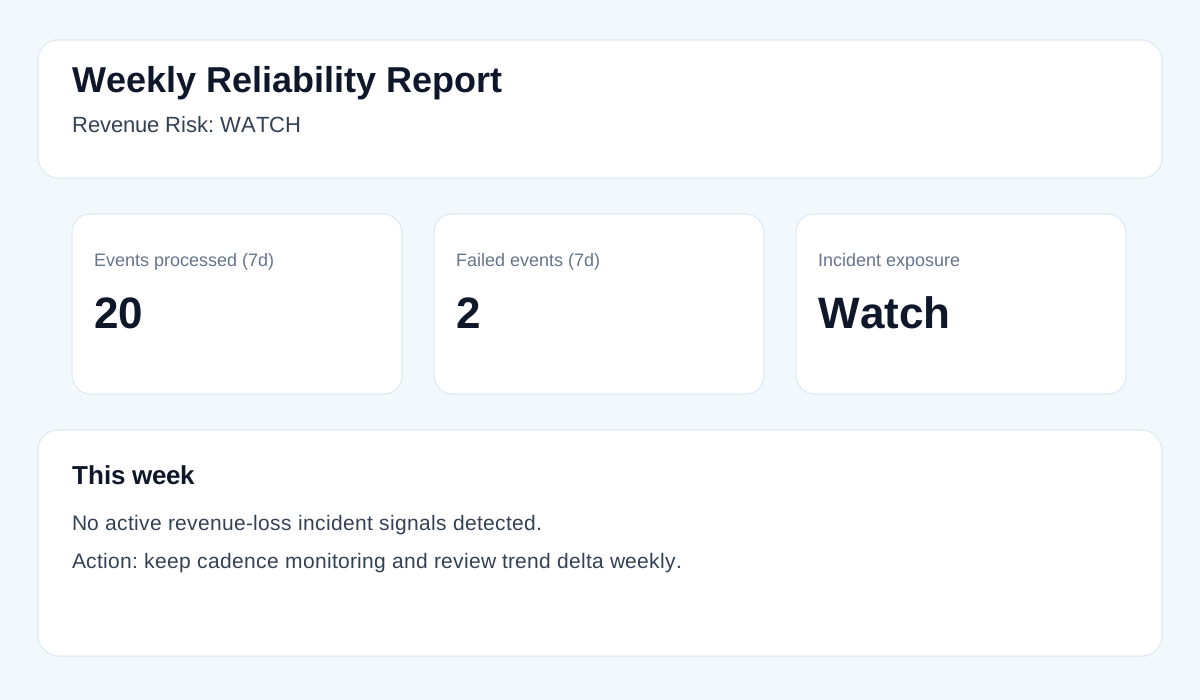
Sample format only. These values are not client results or production telemetry.
Revenue risk (example)
WATCH
Failed events (example)
2
Conditions found (example)
1
Service state (example)
Watch
Agreed cadence
Checks align to the approved surface and response need.
Actionable escalation
Watch conditions include evidence, owner and next step.
Weekly report
Processed, failed and pending pressure stays visible.
Bounded access
Access is scoped to monitoring and reporting needs.
30-day pilot
Monitoring live within the first few days. First executive risk report within week one. After the pilot: £500/month managed monitoring, cancel anytime.
Illustrative report format
The sample shows the reporting structure and agreed fields. It does not present sample values as customer outcomes.
Checks every
Example cadence field
120s
Processed (7d)
Example event-volume field
20
Failed (7d)
Example failure-count field
2
Risk path
Payment-flow issues often surface only after month-end review, delaying corrective action. The delay increases missed recoverable revenue and reconciliation effort.
Partial recovery can hide repeat failure patterns across cycles. Teams assume stability while leakage continues in the background.
Billing and access mismatch creates churn risk and refund pressure. Each incident increases support load and damages trust near renewal windows.
Silent renewal failure reduces predictable cash flow and forecast confidence. Finance and ops spend additional hours validating what should be automated.
First seven days
Delivery evidence
Sample values remain clearly separate from customer outcomes.
Managed service, not another alert stream
Datadog and Sentry surface telemetry. This service adds risk-state tracking, weekly reporting and managed escalation tied to business impact.
Pricing and fit
£750 flat for 30 days, followed by £500/month managed monitoring if the ongoing service fits.
Sample report
FAQ
Most teams complete onboarding and baseline setup within 5 to 7 days.
No. Access is scoped to monitoring and reporting requirements.
Success is tracked using check cadence, incident capture, failed-event pressure, and week-over-week risk movement.
A concise reliability report with risk state, incident summary, and prioritized actions.